
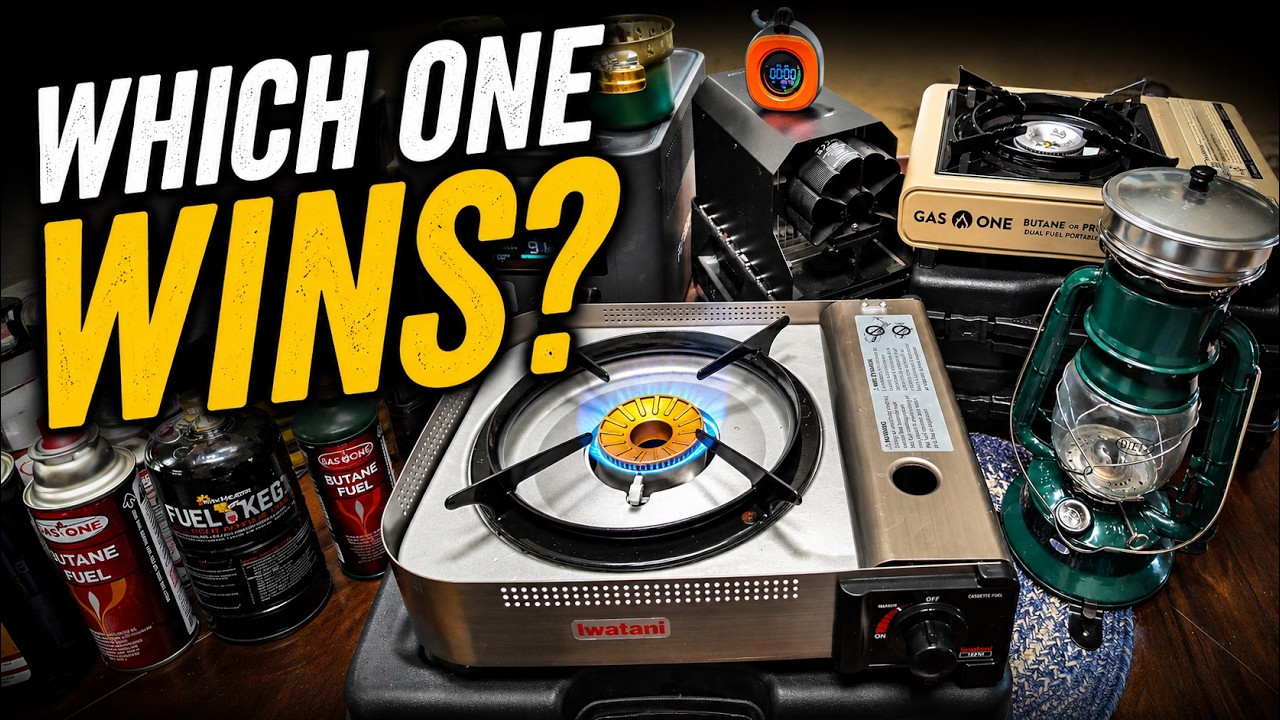
7 Emergency INDOOR COOKING Options Tested: Real Results!
Which emergency cooking option is actually the best when the power goes out? I tested the most recommended indoor emergency cooking methods from the preparedness community to find out which ones are actually worth buying. From butane stoves and alcohol burners to canned heat, the Vesta InstaFire, hot plates, and even a Dietz Lantern Cooker, I compare them side-by-side using real-world testing—not marketing claims.
In this video, you’ll see how each option performed for boiling water, cooking food, fuel storage, shelf life, indoor safety, ease of storage, and cold-weather performance. I also introduce my BOL (Bug Out Location) Score, which ranks each cooking method based on the factors that matter most during a real power outage or grid-down emergency. Some options performed far better than expected… while others simply weren’t worth the hype.
Whether you’re building a bug out location, preparing for winter storms, or simply looking for the best emergency cooking stove for your emergency preparedness supplies, this video will help you make an informed decision before spending your money.
👍 If you enjoyed this video, consider subscribing for more real-world preparedness testing, gear reviews, and practical emergency preparedness advice.
Products Mentioned
CO Detector https://amzn.to/4gybZD2
CO Alarm (Kidde)https://amzn.to/44X2TIM
IMUSA Double Electric Hot Plate https://amzn.to/4gyvQSr
Dietz Lantern Cooker https://amzn.to/4vvVpri
Alcohol Stove https://amzn.to/4w8HXdG
Sterno Camping Canned Heat (best tested)https://www.walmart.com/ip/Sterno-Brand-6-Hour-Camping-Wick-Canned-Heat/635407656
Instafire Canned Heat https://amzn.to/4fqArFf
Vesta InstaFire https://www.campingsurvival.com/products/vesta-self-powered-indoor-space-heater-stove-by-instafire-canned-heat-cooking-fuel-3-pack
Gas One Butane Stove https://amzn.to/4pcuJdh
Iwatani Butane Stove https://amzn.to/3SQDEFm
Iwatani Cassette Butane Stove (Smaller)
Chef Master Butane Stove https://amzn.to/44jm9ju
Techef Butane Stove https://amzn.to/4ycBHmO
Visit Our Websites…
The Bug Out Location: https://thebugoutlocation.net/
MySurvivalfoods: https://mysurvivalfoods.com/
SurvivalistPrepper: https://survivalistprepper.net/
Visit our Amazon Storefront for More Supply Recommendations: https://www.amazon.com/shop/survivalistprepper?ref_=cm_sw_r_cp_ud_aipsfshop_90QA9VD7YBVV95P6DFXJ
NOTE: Most of the hyperlinks to products included on my channel are affiliate links, which means that I make a small percentage of the sales if you purchase an item after clicking one of the links from my channel. This comes at no cost to you. As an Amazon Associate, I earn from qualifying purchases. All the money I get goes towards funding my channel’s costs, such as production equipment and new gear to test. Thank you for supporting my channel!
0:00 Indoor Cooking
1:23 Hot Plate
3:01 Lantern Cooker
4:44 Alcohol Stove
6:15 Canned Heat
8:31 InstaFire
10:06 Gas One
11:32 Butane Stoves
13:06 Final Grades
#preparedness #preppers #poweroutage #emergencypreparedness #survivalgear
33 Comments
Would you (or do you) use propane indoors during an emergency? Even if the stove isn't rated for "indoor"use.
My 60 day prepping larder has Two-Thirds of the foods capable of being eaten cold without cooking. I feel that it's vitally important not to use fuel stoves unless you have to, simply because gas cartridges don't last very long and I don't want to find myself in a situation where I'm left with masses of pasta, rice and oats but no fuel to cook them with.
I use KOVEA fuel in ALL my "Butane" appliances. It is a blend of Butane With Propane. In the cold weather the Propane will still ignite and that will allow the Butane in the mixture to also ignite. Great for car shtf kits and deep cold weather.
Multiple types = best. Alcohol + propane + rocket stove. The R/S can use any combustable matter, twigs, leaves, etc. When conventional fuel runs out, you still need to cook.
Nice video! Maybe we can collab😊
I have several of each of these stoves: alcohol, solid fuel, canister (remote & jet boil styles), folding natural fueled hikers, propane (1 single & 1 two burner), 2 small hibachi style, 1 indoor safe gas one butane, and 1 heavy duty rocket stove. I have 1 electric single burner hot plate and in induction plate.
The fact those cheap butane/propane stoves are used around the world as a home stove, cooked on pretty much nightly says a lot. I have used one for a few weeks and it never let me down. The fuel cans are cheaply made and sometimes the valves don't seat properly on ejection, but a firm hit on the table tends to seat them. It could be worth keeping a spray bottle of soapy water nearby to check the valves are seated properly. Be careful what you cook on, unlike many other stoves a lot of heat is deflected downwards and it can melt camp tables or other surfaces.
I also used a "Simon stove" for a while, an alcohol stove. You can refill them, just snuff it out (if still running) and pour more fuel in, just make sure there's no naked flame about as it may hiss and spit. The downside is they remain hot for some time and can't be packed away safely.
Excellent presentation 👏 I like & agree with your picks.
I’ve recently purchased the Chef Master 12,000 BTU (model 90235), based on the favorable customer reviews regarding the quality of the locking lever and the dial knob, and noting that it has ventilation holes to help keep the unit cooler.
The best fuel for alcohol stoves is methyl alcohol, or methanol. Slightly difficult to find locally except as a fuel additive known as Heet. Available almost everywhere including gas stations and quik-marts. Always buy the yellow bottle with blue label; it contains only methanol. The red bottle contains additives that will burn poorly.
I have 3 Coleman camp stoves. one with an oven. I have an adapter the I can use a 20lb or larger tank. my main stove in the house Is a propane stove. why would I babe worried about propane cooking. I can sit it on top of my main range and use the exhaust fan..n way cheaper than butane or small propane bottles.
Coleman makes a stove that uses the three dollar gas cylinders that are in all the Asian stores and the advantage of the Coleman stove is it has a wind break built into the burner that works pretty good
Use induction. I don't know why you did not test it.
Coleman fuel two burner stove with the accessory propane attachment for the win.
Propane is 100% indoor safe you just need to make sure it is vented.
I keep butane cannisters, denatured alcohol, and charcoal on hand at the casa, esp now during Typhoon season which just started and we’ve already had 2 CAT5s this year, only other option is wood 🪵 but you better get that gathered and sorted before the rains start.
Depends how long the stove is needed and what will be cooked.
Those don't look like the Sterno cans i used in Scouts. They had compression kids like a paint can, and you could use the lid to control the flame by sliding it partway over the can.. You could also get a folding aluminum rack/grid for it. Worked just dandy to cook a package of Tuna Helper, and a lot friendlier to my 12 y.o. budget than a butane or gas stove and fancy freeze-dried food.
We have a propane stove in the house so if the power is out all you need is a match to light the burners. We also have a couple of alcohol burners, a Gasone and the old coleman liquid fuel/propane campstove (not the best choice for indoors). My thought…If the power goes out temporally use it as a learning experience.
Your in house gas range in my area burns propane gas. No problems. Do a propane campstove would be no different. Just open a window while cooking.
Most people see natural gas used commonly in kitchen ranges as some mystery gas. It is a mix of propane, butane and ethane with a small amount of methane…since that's what boils to the top of a refinery column.
Therefore any of these fuels individually is no more dangerous than your gas stove. If you have proper flame height and a nice mostly blue flame you are going to produce water vapor and CO2 as the byproduct. Very little CO unless you smother it or run it on a trickle low setting where the flame is almost about to fail…for hours.
When people see a thing they are often more afraid of it than when it is secretly behind your walls or in a closet….flowing and burning away
Best occasional use in the kitchen is the one burner butane stoves originally developed for small boat galleys. The can can stay (disengaged) in the stove and the stove in a nice plastic case to fit in a lower cabinet.
The best common use is the two burner Coleman propane camp stove on top of your electric range if the power is out. Two burners will make any meal quickly and your meat and side will be ready together…as well breakfast can have hot coffee and a frying pan at one time.
Instead of a regular alcohol stove i use a metal muffin pan with the middle cups filled with perlite and alcohol. With a rack over it it cooks well.
I have 2 of the butane cook tops and love them. All my cast iron is flat bottomed so they set on anything.
I have an Iwatani butane stove that we have used during hurricane outages and holiday cooking when an extra burner has come in handy. Added a gas burner ring reducer to be able to use mokka pots. Lightweight, small, portable and dependable, it’s been one of my must have hurricanes supplies. Highly recommend.
Turning emergency power into heat is a massive waste
The lantern would be best for warming a coup of soup or coffee
Alcohol is used on sail boats very safe, aside from the open flame.
Many old sailboats have alcohol stoves, some pressurized. It is a low cost reliable heat for cooking but on the lower end for BTU output.
Heat in a can is for keeping warm, not cooking. You can get smaller amounts of water to a boil, if you know what you are doing.
I do have the dual fuel propane/butane cooker. It comes in a 8-9k BTU and av1–15k BTU model. I like both.
But my actual setup is based on a power station. Combined with a rice cooker, electric tabletop grill and a small electric skilled. Of an a kettle.
Cooking a pot of rice might only take 300 wh, heating water 60wh, grilled chicken thigh 200-150wh scrambled eggs under 100wh – you optimize.
Best time to cook is daytime with a solar panel attached, making it truly renewable.
My backup is the gasOne
My water heating system is mains gas (UK) but my cooker (stove) is all electric. We used to suffer from irregular power outs in this area (the local transformer has now been replaced) so I got a Camping Gaz branded table top butane cooker.
Turns out it was a fabulous buy and gets regular usage for Japanese shabu shabu hotpot meals.
Plus I can get the gas for $2 a cylinder at the local discount store.
What REALLY sold me on it was, while in a 3 star restaurant in Paris, they used the self same table top stove to cook a flambé dessert at the customer's table!
I have used alcohol stoves, Butine stoves, Propane stoves and even wood stoves camping over the last 65 years. (82 years of Hurricanes) During hurricanes and power outages it is the alcohol stove for hot water beverages. Meals it is the Iwatani now and use to be the dual fuel Gas One for solo meals. Shared meals the good old Coleman double burner in either white gas or the gas canisters in the dual fuel mode. The Coleman stoves are always out on the back porch. Depending on conditions it has even been a combination of stoves, at times.
Wonder about an induction cook top and a power station?
Gas cannisters from Korea on a camp cooker or,l a hobo stove and twigs in the backyard