
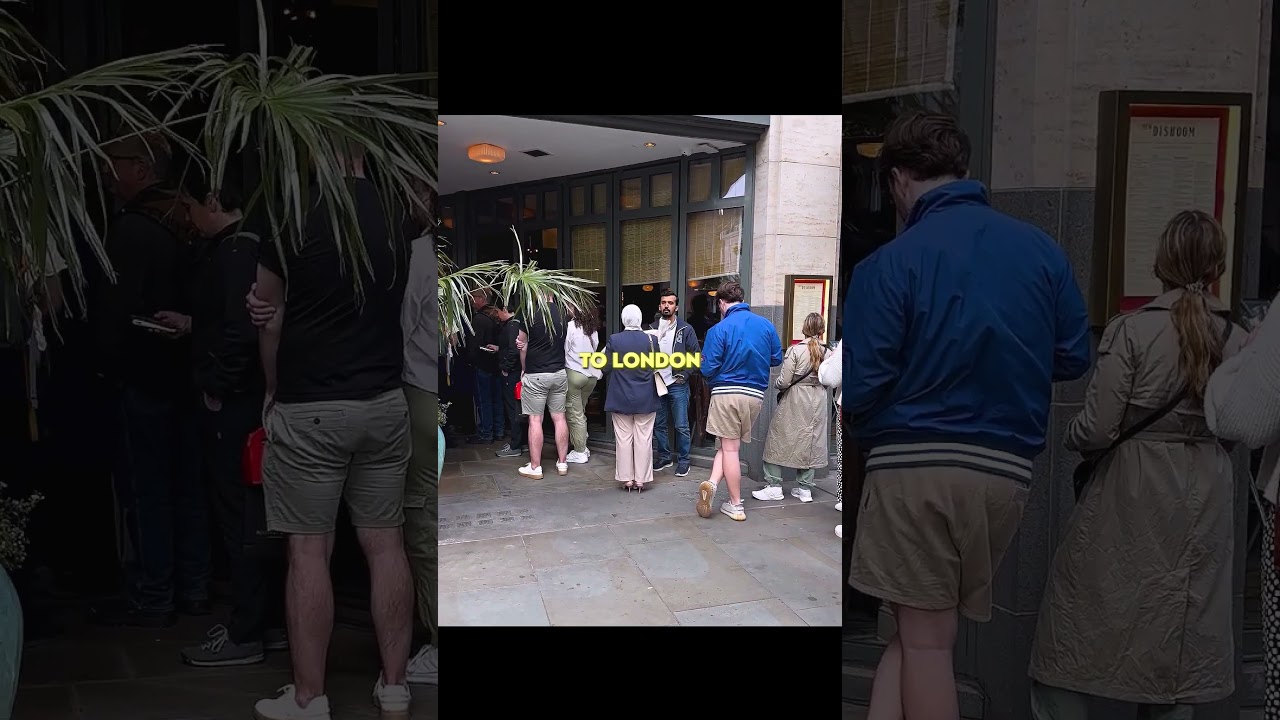
This Restaurant Turned Dinner Into A Bet
Most discounts are understood in seconds and forgotten just as fast. What Dishoom built was different. By turning a routine offer into a moment of suspense, they made the reward feel larger than its actual value — and in doing so, changed how people spent, remembered, and talked about the experience. This is the part traditional economics misses: people do not respond to value only on paper. They respond to tension, story, anticipation, and the feeling that something ordinary just became worth paying attention to.
The Legal: Educational use under Fair Use — original commentary and analysis added beyond source material.
28 Comments
dude needs to wipe his mouth
Seen this in a pub in norwich its a brilliant idea
Dishoom is a great con…I got to give it to the owner for hustling basic Indian food that these lot go too loooooool
Guy should cut Indian food for a while and have some salad. He won't need dice for that
Sir, clean the mayonnaise in the corner of your mouth please
Loaded dice…
Foaming out of his mouth?
But is it that good? I mean for a chain it's pretty good. But I have had much better.
Also people just love the rush of a cheeky gamble
How is it a 16.6% discount if the meals cost different amounts?
I could put the die in the oven and get 100%
Called gambling
This dude should teach a course together with "Dr" Casagrande, Prof. Jiang and that weirdo psychologist that "analyzes" basically all news… The four horsemen of bullshit
I know Ali, Tyson, Anthony Joshua and Jake Paul.
Does that mean fighting is doing a poor job at marketing itself?
It's the fun of the game, not always the size of the reward. It's just fun to win !!
I'm not going to spend any more and I would think of it exactly as a 16.666% discount.
I'm ordering what I like so not spending more per visit but I might visit more often so still a win for them.
Thats genius
Is it actually a 16.6% discount, or is it a 16.6% chance of a 100% discount which psychologically is a lot better
His teachings are (A)bsolutely (I)ntricate.
It's crap Indian food. Please don't insult what the Iranis make in Bombay.
I fancy a curry now
The food is for white tastebud. No asian is eating there. Its meh
So gambling.
They like gambling
I dont eat free if give me indian food.
Because it isn't 16.6%, it's all or nothing
this guy needs a rabies vaccine stat
Only thing I would change is give 5% discount if dice did not roll 6, to have some satisfaction to consumers at the end