Tell me about the Leopard Lounge. Why do these places all seem to have animal names?
First of all, my least favorite thing to get involved in is the naming of a space. It’s such an emotional process, and you also just want to get that accomplished and figure it out. I don’t know what the comparison would be in your world — maybe the title of the story.
“Leopard” and “jaguar” are what people kept saying, because we had touches of animal fabric, which we wanted because that’s timeless, and we like timeless. Honestly, I think it was the day before we opened when we were like: “OK. It’s called the Leopard Lounge.” And there was this rumor that it was 25-plus down there.
Why 25?
I don’t know! Literally, I just had a manager from Loco come over and say, “So, it’s 25-plus down here?” Do you think I could ever look at a human being if I were working the door and say, “Unfortunately, you’re not 25?” I don’t even think that’s legal.
Also, our social media [worker] is, like, 22, so she couldn’t come in with her friends. This is for everyone. I think that’s the fun thing about restaurants — you want them to be diverse and filled with everyone. If it’s all just the same group of people, what’s the point?
What role does design play in a successful restaurant?
That’s such an amazing question. I don’t have the answer, but I have an example. I think people expect these really amazing, beautifully designed restaurants from us at this point, and we ended up going all in on [Dalia].
We’re in the world of influencers, right? Somebody literally got a tour because they’re friends with us, and they took some video and posted it. Because it was so beautiful, it just got out there, and then people started sending it to each other. It was as organic as organic can get. Next thing we knew, we had 11,000 people following us on Instagram. It was so beautiful that it just spread like wildfire.
How important is influencer culture right now?
Clearly it’s important to build buzz.
Does that buzz only attract a younger clientele?
I don’t think so, because there are influencers of all ages. We get influencers from all over the place who are trying to get in because it’s pretty and they want to shoot it, and then on top of that, the food’s really good. It’s free advertising, but it isn’t free, because we end up paying employees to manage [social media].
The other really interesting thing with Capri, the first [restaurant] that we did, is that it just blew up on social media. We didn’t do that. The people did it, and then next thing we know, we were trying to manage it.
When you say you have to pay: You hire a social media person?
Yes. That person gets paid a chunk of cash. It’s not cheap at all. [We need to] manage the questions that come in through social media and on the phone. You’re getting hit with private text messages. Then you’re getting hit because people are trying to figure out how to get in. They hit social media, and then they’re like, “Hey, can I get a reservation for four?” Next thing you know, you have 100 people from social media trying to get in. It’s crazy.
People say, “Oh, they’re underbooking.” We’re not underbooking. It’s just: There’s millions of people who live in the city and outside the city who want to come here, and it happens with all new restaurants. It’s hard to manage. We want to be hospitable. We know we have to get back to people. So we have to hire someone. … to figure out how to squeeze them in.
What if you just went completely off the radar and didn’t do social?
The restaurants are expensive, and we have to figure out how to get the investment back. It’s like a startup of any business. We’re not perfect, but we care.
Why did you get into this business?
My dad and mom owned a short-lived restaurant in the Hudson Valley area. My dad was a chef; my mom was a waitress. It didn’t work. This was before I was born. My dad was an alcoholic. He had to get out of the restaurant business [to get sober]. As a boy, I remember visiting my dad in rehab. But before that, he ran a crazy busy steakhouse in Boston called the Red Coach Grill. He had to get out of it because of booze, and he got into working in nursing homes as a chef. They loved him. He put so much effort into the food. He got me a job working for him in a nursing home in Hingham, and I fell in love with it.
I was a terrible student in school. I should have worn glasses, and I probably have ADD. I went to culinary arts school at Newbury College. I basically partied, but they liked me, and I got hired at a college job fair for the Lyons Group with four or five other culinary students at Harvard Gardens.
It was amazing. The chef would change the menu every Thursday. I took a job as a chef at Lucky’s, a speakeasy dive bar. I did this whole comfort food thing. It was the first time I got any recognition from the Globe. I did an Asian noodle dish, and somebody picked up on it and did a blurb on it, and then at Lincoln Tavern, I won “best burger” a couple of times.
What type of restaurant does Boston need more of right now? And what don’t we need?
We definitely have too much Italian; we’re hitting way too much steakhouse. I think we need more wood-fire restaurants. Dalia was originally going to be a wood-fire Japanese restaurant. I think that would be amazing.
I think we need bakeries, which is a lost art. We need really good slice shops. I think we need more specialty shops, like Formaggio [Kitchen], like Eataly.
Design-wise, what makes you cringe? What’s overdone?
I don’t find myself wanting to be in places that are super modern. I like layers. I think of restaurant spaces like food, like layers of flavor with different textures. And I hate fake plants. I do have a couple of fake plants in Dalia.
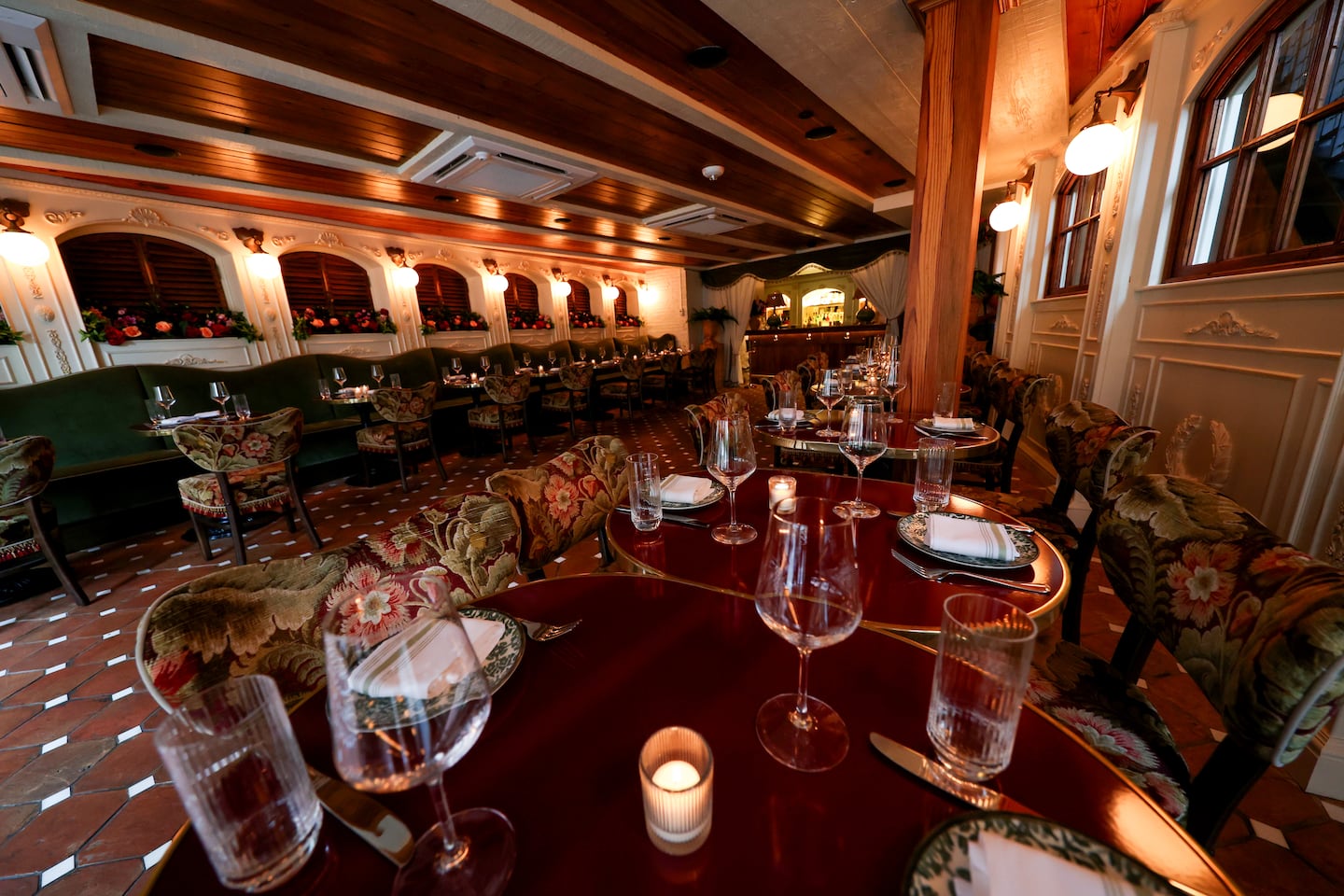 The downstairs dining room at Capri, in the South End.Barry Chin/Globe Staff
What’s the next up-and-coming Boston-area neighborhood?
I think the South End is going to come back.
Do you? Despite the big Bar Mezzana closure?
Yeah, but I still think that the South End will come back. There are some people doing cool stuff. Desnuda has a nice, lively bar scene, and Louis Corner in the old Butcher Shop space. Ken Oringer is still cruising over at Toro. I think we’re going through a transitional phase in the city.
A lot of people are getting out of the restaurant game, and I think that’s just a natural thing. It’s really hard, and people can’t keep up with staffing; it’s almost impossible. In order to keep up with staffing, you have to keep up with the changing costs in the city. It’s expensive to live here, but it’s also expensive to staff all these places.
The Seaport is booming. All these new restaurant groups from all over the world are going in there, and they’re pulling staff out of neighborhoods, which is scary. It started with COVID, right? COVID happened, and I would say Somerville got destroyed. And I always felt like Central Square could use a comeback.
Why?
I feel like there are fewer rules there. Nightlife could be there. It’s more affordable. It’s close to Harvard, and it’s close to MIT, so you get the younger kids. But it just needs somebody to take that risk. I think we need to work on our neighborhoods. Everyone’s focusing on the Seaport. I think we need to focus on neighborhood restaurants again.
Where do you love to eat when you’re not working?
I asked my wife that question this morning, and she’s like, “Everything that you eat is going to give you a heart attack.” I like steak. I like fatty cuts of beef. I like burgers. I like pastries. I like everything bad for me. Chengdu chicken wings from Blossom Bar are one of my favorite things.
I think that Zuma does a really good job with their raw fish program. I like Ken Oringer’s restaurants. Sarma is great. But, honestly, I’ve been with my [kids]. I don’t get out like I should.
Interview has been edited and condensed.
Kara Baskin can be reached at kara.baskin@globe.com. Follow her @kcbaskin.