
Charles Raben is a chef and model in New York, drawing on his Dominican-German heritage and French culinary training without boxing himself into one identity.Queens is where his worlds meet, inspiring his cooking style and creative outlook through the borough’s famously eclectic mix of cultures and flavors.Cooking up his own rules
Charles Raben is a chef and model in New York, which already suggests a life involving several outfits, a few late nights, and very little interest in doing just one thing.
Of Dominican and German heritage and trained in French cuisine, he has built a creative practice that moves freely between cultures, disciplines, and whatever happens to catch his attention.
“I think that in the same way I am racially ambiguous, so is my food. It can be many different things but all reflections of my identity and the way I relate to it.”
It’s a useful philosophy in New York, a city that has never been especially good at keeping things in their respective boxes. Charles doesn’t try to force his background into a tidy culinary formula, either. His food can be French-rooted, New York-inspired, or something else entirely. The point is that it feels like him.
Queens, with a side of everything
For the last six years, the chef and model has called Queens home. His wife is from the borough, and it’s where he feels most connected to his roots. Not necessarily because it offers a perfectly packaged version of Dominican or German culture, but because it offers something much more New York: everything, all at once.

suit baroni / top suit supply
His favorite example is one particular intersection where he can find chai, goat momos, and Colombian pastries within two minutes of each other. That’s hard to argue with.
For Charles, Queens embodies the spirit of the city because it allows cultures to overlap without asking anyone to explain themselves. Growing up in New York has given him a similar sense of ease. “There is no street or neighborhood I haven’t or wouldn’t go to,” he says.
French training, New York instincts
His culinary foundation is French, but he has no interest in treating that training as a set of borders.
“My cuisine is rooted in my French culinary training but extends outwards from there. It is whatever it needs to be and whatever I feel inspired by in that particular moment.”
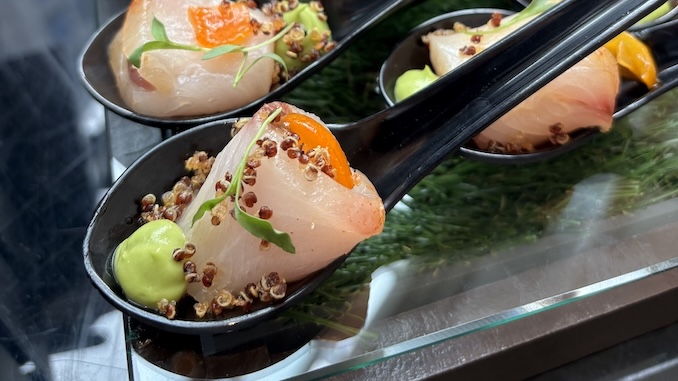
New York delicatessen culture recently found its way onto his menu, too, with beef tartare dressed in pastrami spice, rye breadcrumb, horseradish dijonnaise, and fried challah.
His Dominican and German heritage is part of the process, influencing everything from menu planning to sourcing. But Charles isn’t interested in turning heritage into a checklist. He sees his mixed background as a reason to stay curious rather than a demand to pick a side.
For other mixed people, he says, there can be a similar feeling of not wanting to be tied to one fixed identity. In his kitchen, that freedom becomes useful.
No balancing act required
Charles takes the same approach to his work as a model. His biracial identity has always been an advantage, giving him a versatility in how he is perceived. There’s no attempt to calculate how much of each background should appear in the room. No carefully portioned cultural split. “It’s not about maintaining balance for me,” he says. “I come as I am.”
The creative industries can be obsessed with defining people, packaging them, and deciding where they fit. He seems happier leaving the category blank. When someone hires him, it’s because of what he has to offer.
New York has also given Charles the confidence to trust that instinct. Its familiarity means he knows the terrain, while its constant movement keeps him open to the unfamiliar. That tension shapes his creative expression, from the way he cooks to the way he dresses.
It also informs his advice to other biracial creatives trying to make their way in the city: “Be authentic and the right path and people will find you.”
Charles doesn’t need to decide whether he’s a chef or a model, Dominican or German, traditional or experimental. He can be all of it, sometimes within the same afternoon.
As seen in the pages of VMAN SEA 06: now available for purchase!
Photography Andrew Perkins
FashionFashionThe art and industry of designing, producing, and styling clothing, footwear, accessories, and beauty trends. It reflects cultural influences, personal expression, and evolving styles across seasons and markets.Go to Fashion Glossary Victor Lopez
Creative direction and production Lorenz Namalata of Fatbrain Collective
Editor Dayne Aduna
Hair Mitsuru Aota
GroomingGroomingThe care and maintenance of hair, skin, beard, and nails, including cleansing, shaving, styling, and scent. Once niche, men’s grooming has grown into a major lifestyle category, and VMAN’s VanityGo to Grooming Glossary Seiya Iibuchi, using MAC Cosmetics
Fashion assistant Justin Guevarra
Production assistant Jen Kang
Model Charles Raben
Frequently Asked QuestionsWho is Charles Raben?
Charles Raben is a New York-based chef and model of Dominican and German heritage.
What is Charles Raben’s culinary style?
Charles’ cooking is rooted in French culinary training but draws inspiration from different cultures, ingredients, and his experiences in New York.
How does Charles Raben’s Dominican and German heritage influence his cooking?
His heritage influences how he develops menus and sources ingredients, but he does not limit himself to traditional Dominican or German cuisine. Instead, he uses his background as an ongoing source of creative inspiration.
Why is Queens important to Charles Raben?
Charles has lived in Queens for six years and considers it the place where he feels most connected to his roots. He also sees the borough’s mix of cultures and food as an embodiment of New York.
How has Charles Raben’s biracial identity influenced his modeling career?
Charles says his biracial identity has been advantageous because it gives him versatility in how he is perceived. He applies the same openness to his creative career, choosing to stay authentic rather than fit a fixed category.

Dayne Aduna
Associate Editor
Dayne Aduna is an Associate Editor at VMAN Southeast Asia, specializing in fashion, grooming, film, television, and contemporary pop culture. With a strong editorial focus on menswear, his work explores how style intersects with shifting cultural movements across Southeast Asia and beyond.
His expertise spans fashion journalism, celebrity profiling, grooming and skincare trends, fragrance, runway reporting, and cultural commentary, with a particular eye for emerging creatives and youth-driven style.
Dayne has written extensively on fashion houses, seasonal trends, designer collections, and the evolving image of the modern Southeast Asian man, bringing both editorial depth and cultural relevance to his coverage.