
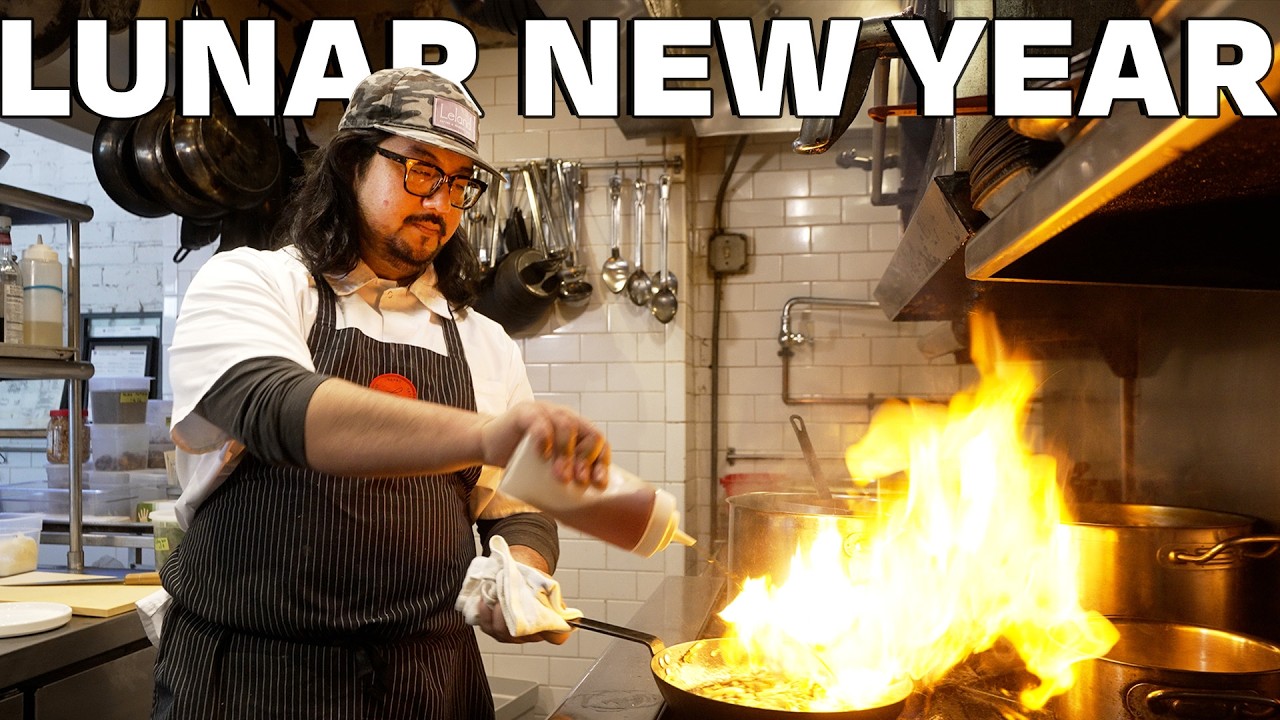
Inside This Brooklyn Restaurant’s Wildly Popular Lunar New Year Menu — The Experts
Leland Eating and Drinking House is a chef-forward neighborhood restaurant in Prospect Heights, Brooklyn, which specializes in nose-to-tail cuisine — incorporating every part of the animal into its dishes. The restaurant has an annual Lunar New Year menu. This year, it features a half pig, which gets butchered in-house and then ground as well as cut into steaks to be served in popular dim sum items — shu mai, char siu pork, and dan dan noodles. Beloved by both neighborhood locals and visitors, the Lunar New Year menu at Leland Eating and Drinking House has become highly sought-after, with dishes selling out nightly.
#nyc #food #chinese
00:00 Intro
00:50 Butchering a Pig
02:38 Making Char Siu
05:37 Prepping Dan Dan Noodles
08:50 Prepping Shu Mai
10:31 Final Thoughts
Credits:
Producer/Director: Gabby Lozano
Camera: Murilo Ferriera, Tom Daly
Production Sound Mixer: Bill Vella
Editor: Josh Dion
Executive Producer: Stephen Pelletteri
Head of Production: Stefania Orrù
Supervising Producer: Connor Reid
Post-Production Supervisor: Lucy Morales Carlisle
Director of Production: Michelle Fox
Senior Director of Photography: Murilo Ferreira
Supervising Producer, Social Video: Jordan Shalhoub
Download the Eater App: https://shorturl.at/Rz1pN
Eater is the go-to resource for food and restaurant obsessives with hundreds of episodes and new series, featuring exclusive access to dining around the world, rich culture, immersive experiences, and authoritative experts. Binge it, watch it, crave it.
Subscribe to our YouTube Channel now! http://goo.gl/hGwtF0
22 Comments
Nice to see a resturant not just re heating some Sysco slop.
so bizarre to see shui mai steamed in a metal steamer, and then served in a bamboo steamer. looks tasty though!
I swear Chef Delfin sounds so much like Andrew from Worth It…. how even?
1000% yes on the dry cure/wet brine nonsense. 🙌
yes thank you for correcting people of using the word dry brine!!
That's some of the worst char sui I've ever seen in my life….
Curing is a more intense technique for extended preservation like sausages, jerky, ham legs. Brining is a less intense short term technique used to enhance a particular cooking technique like steaks, fried chicken.
They are different.
Of all the mixed terms and definitions, his is somehow the most wrong. Dry brining is called that because it's supposed to differentiate from regular brining, which is traditionally water-based. It's still supposed to achieve a similar end result. If someone just said they brined something, most people would assume they put it in a liquid brine. "Dry brine" isn't just an influencer term. Hell, he uses "cure" wrong, since curing was traditionally meant for preservation, hence dry-curing, salt-curing, smoke-curing. His "cure" is actually more akin to a dry brine because he's not doing it for preservation, he does it to impart flavour and improve the end product.
yeah that charsiu looks like an embarrassment. I think it's on par with Panda Express. like Chinese inspired but in no way shape or form would be considered authentic or taste anything like what chef calls it.
yeah I would be disappointed going in thinking it would be authentic Chinese food. this guy needs to talk to some Chinese chefs first.
I love that "Filipino adjacent" 🇵🇭 lol I'm going to use that to describe my husband and my non Filipino friends 😂
Dave Arnold might be your spirit animal
"some salt" Holy Toledo!
sinigang supremacy!
aba….. Pinoy is thy bro…
KABAYAN!
Tie your hair up
The chef seems like a nice, down-to-earth guy. I'm sure his food tastes great.
Those Dan Dan noodles, though….Hoisin sauce? Tahini instead of roasted sesame paste (no, they aren't the same thing)? Whole Sichuan peppercorns just tossed in carlessly with the pork?
I'm sure hipsters in Brooklyn pay an arm and a leg for this. Meanwhile, you can got Flushing and get something 100x more authentic for probably 1/3 of the price
restaurant should be called hoison sauce
For more on Leland Eating and Drinking House, follow along on IG: https://www.instagram.com/lelandbrooklyn?igsh=aW9ndXpkaHloZTk4
Sinigang gang!!
What are going to do when they come expecting the food for free? Florida welcomes you.
That char siu looks so sad…