
American Chinese food has spent more than a century adapting to the habits of its diners, which may explain how a cuisine born from immigration, scarcity and relentless ingenuity eventually became something many of us enjoy eating in sweatpants, straight from a paper carton, six inches from a glowing television screen.
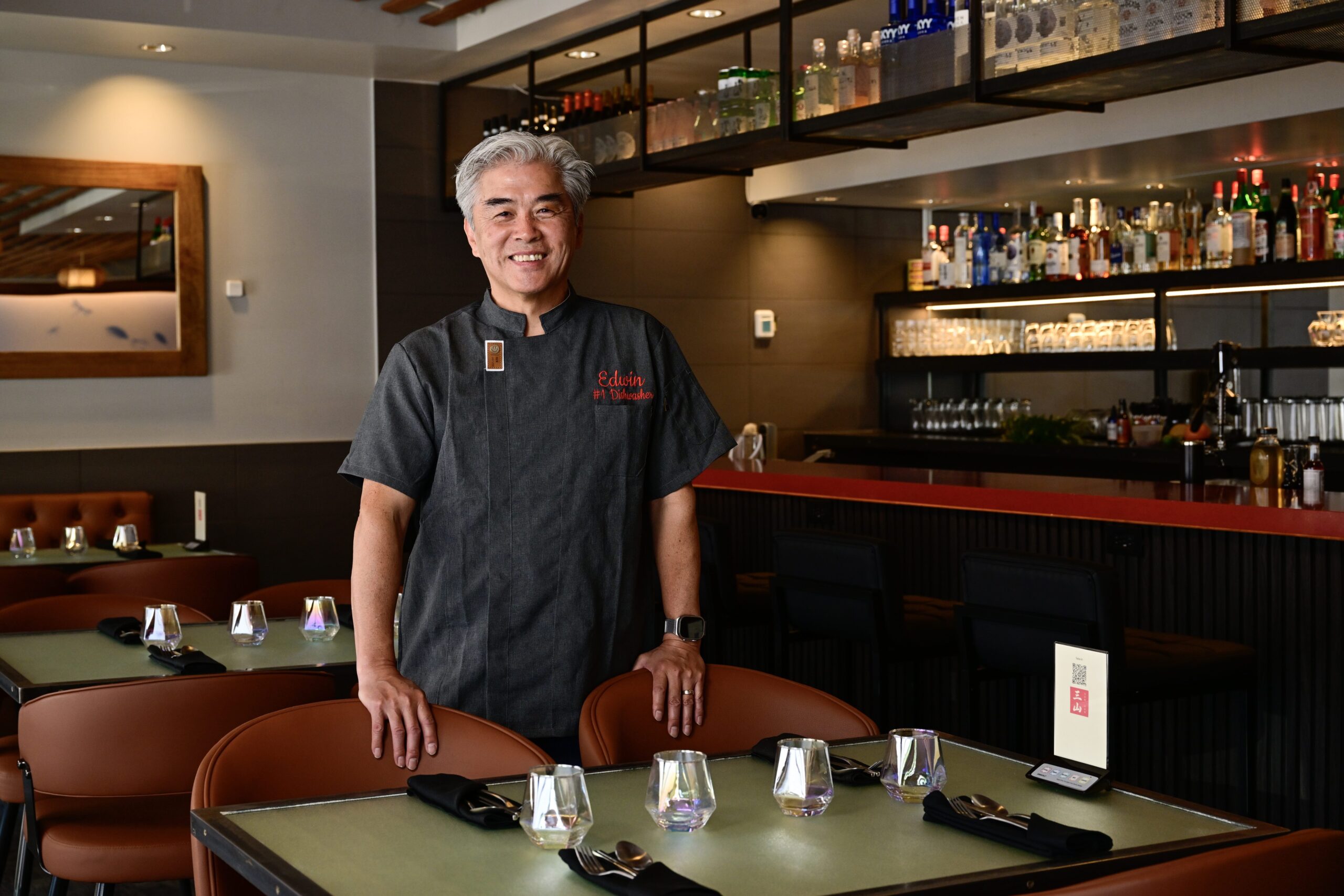
With San San, an 80-seat restaurant that had a soft launch on Tuesday at 2014 10th St., near the Pearl Street Mall, chef Edwin Zoe is arguing that dishes like General Tso’s chicken and chop suey belong in a dining room with proper craft cocktails, soft booth lighting, and guests wearing pants that do not double as napkins.
Zoe, a 2022 James Beard Award semifinalist for Outstanding Restaurateur, knows Boulder’s appetite for casual Chinese food well. His fast-casual restaurant, Zoe Ma Ma, 919 Pearl St., Boulder, has built a loyal following around Taiwanese street food, steamed buns and noodle dishes. He is also behind Pearl Poké, 2010 10th St., Boulder, and Dragonfly Noodle, which closed in Boulder just weeks ago to make way for San San.
Zoe said Dragonfly Noodle was created during the early days of the pandemic, when the restaurant needed to rely on counter service and a limited menu, even though the space had been designed for full-service dining.
“As we have emerged out of the pandemic, I want to realize the full potential of the space with a concept I have wanted to create for quite some time,” Zoe said.
Zoe hopes to fill some holes in the area with his new concept.
“What is glaringly absent, especially downtown, is that there isn’t a Chinese place that you can go ” for elevated dining, Zoe said. “Zoe Ma Ma is beloved by the community, and I’m so grateful for that. But sometimes people go there to grab a quick bite that is delicious but extremely casual. But if you want to go out for your anniversary, I don’t really see a venue for Chinese that way.”
 Boulder chef and restaurateur Edwin Zoe at San San in Boulder on Monday. (Matthew Jonas/Staff Photographer)
The name San San translates to “three mountains,” a nod to Zoe’s very first morning in Boulder more than 40 years ago as an incoming student at the University of Colorado Boulder. After showing up a day early during a dark rainstorm to move into his dorm and finding nobody there, he spent the night sleeping in his car, waking up to see wisps of mist drifting over the first three Flatirons.
“That was my first imprinting of Boulder,” Zoe said. “I looked at it as, ‘This is a really beautiful place.’ From my perspective, I only saw the first three Flatirons, so I think of Boulder in my mind as the three mountains.”
For Zoe, who immigrated from Taiwan and once tried to distance himself from American Chinese food because of the stereotypes attached to it, the restaurant represents a return to a cuisine he spent years learning to see differently.
“When I was a young immigrant, I was very mindful of stereotypes,” Zoe said. “American Chinese food was considered cheap and less regarded because it was ‘less authentic’ than regional cuisines, such as Sichuan or Hunan.”
Over time, Zoe began to see adaptation as the defining feature of American Chinese food rather than evidence against its authenticity.
“American Chinese food came from generations of Chinese immigrants who cooked and adapted the food to the tastes and ingredients of their communities,” Zoe said. “It really is not separate from that. Rather, it is just a branch of it.”
At San San, history takes center stage — take the Chop Suey, for instance. Zoe notes that the dish, which translates to “odds and ends,” originated from the practical scarcity faced by Chinese miners and railroad workers in the 1800s, who threw whatever proteins and vegetables they had into a wok.
“It is so humble and basic to the immigrant story, and so foundational,” Zoe said. San San’s version will honor that legacy while reflecting the abundance of modern Boulder, rotating seasonally with fresh, varied ingredients.
Instead of the sprawling, 20-page menus often found at old-school Chinese joints, San San will offer a focused lineup of about eight seasonal entrées, a half-dozen appetizers and a couple of soups. For the indecisive, there will be a multi-course tasting menu priced at an approachable $40 to $50, ensuring a high-value experience that allows diners to sample the menu’s breadth.
There will also be a few “indulgences” that might surprise purists, including a homestyle burger and a special Friday-night-only prime rib. But even the burger is a nod to history; early Chinese restaurants in the American West often had to serve staples like meatloaf and hamburgers to survive and attract wide appeal in remote mountain towns.
Zoe acknowledges that a burger may not be what everyone would expect from a Chinese restaurant.
“Someone who may not know the history of American Chinese restaurants might look at a burger on the menu and think it is odd that it is there. But if they dig a little deeper, it makes perfect sense because that is often how American Chinese restaurants survived in the West.”
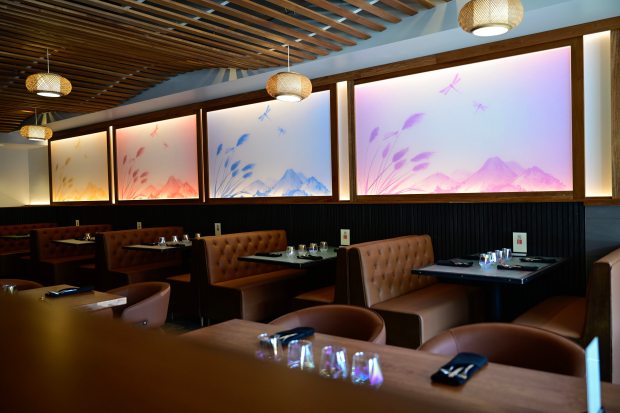 San San is a new American Chinese restaurant from local decorated chef, Edwin Zoe, of Zoe Ma Ma. (Matthew Jonas/Staff Photographer)
On Friday nights, Zoe will also roast a single USDA prime rib, served with seasonal vegetables and fried rice, until it sells out.
The physical space will feature booth seating, outdoor tables and a bar program led by beverage director Matthew Jansen, with cocktails ranging from $13 to $16, including the Formosa Martini with lychee and yuzu, the frozen watermelon Xigua Margarita and the Yama Old Fashioned with Japanese whiskey.
San San will also run a progressive happy hour, during which selected food and drinks will cost $3 from 3 to 4 p.m., $4 from 4 to 5 p.m. and $5 from 5 to 6 p.m. The lineup includes Sapporo draft beer, a house cocktail, house wine, dumplings, pulled pork bao and spicy cucumber.
“If we just did another happy hour, it would be just another happy hour,” Zoe said. “I thought we could do a progressive happy hour that’s really easy to understand.”
San San will forgo traditional tipping in favor of an automatic 18% service fee on every bill. Zoe was a prominent business advocate for Amendment 70, the 2016 ballot measure that raised Colorado’s minimum wage, meeting with then-U.S. Labor Secretary Tom Perez during the campaign.
His stance is rooted in fixing the systemic wage gap between front-of-house staff and kitchen workers, who he said perform physically demanding work for lower pay due to tip-pooling restrictions. All of his restaurants have operated with this type of service fee, which decouples compensation from guest gratuities entirely. Customers will not be expected or asked to add anything extra.
San San will be open daily from 11.30 a.m. to 9 p.m. at 2014 10th St. in Boulder. Additional details available at sansan.food.


