Ground beef is the basis of endless meals. A single pound is the starting point for meaty pasta sauce, tacos, meatballs, casseroles, burgers, soups, and sandwiches (to name a few). And while it’s easy to cook, there are pitfalls. If you cook ground beef the wrong way, you end up with rubbery, flavorless meat.
While talking to an expert on all things beef, I learned that one of the big keys to success is the right pan. Chef Dagan Lynn, executive chef of Beef. It’s What for Dinner. (aka the Cattlemen’s Beef Board and National Cattlemen’s Beef Association’s consumer website) gave me the scoop on the best pan for cooking ground beef, plus some handy tips for success.

Credit: Simply Recipes / Adobe Stock
The Best Kind of Pan for Cooking Ground Beef
“A large, heavy-bottomed skillet, such as cast iron or stainless steel, is ideal for cooking ground beef,” says Lynn. “The heavy bottom helps distribute heat evenly and prevents hot spots that can cause uneven cooking or scorching, while a larger cooking surface gives the beef enough room to brown rather than steam.”
Browning gives ground beef its delicious flavor. Think about steak: searing in a ripping-hot pan creates a deeply browned crust on the outside, and that’s what makes steak taste like steak. The same principle applies to all beef, including ground beef. But because ground beef is processed into small pieces, it releases liquid quickly, which can prevent browning. The best defense? A big, hot pan.
Using a bigger pan than seems necessary means the liquid evaporates faster, and more of the ground beef contacts the pan. This will encourage browning, resulting in even cooking and great flavor. In short: A big, heavy pan is the ticket to perfectly browned ground beef.
The Importance of Preheating the Pan
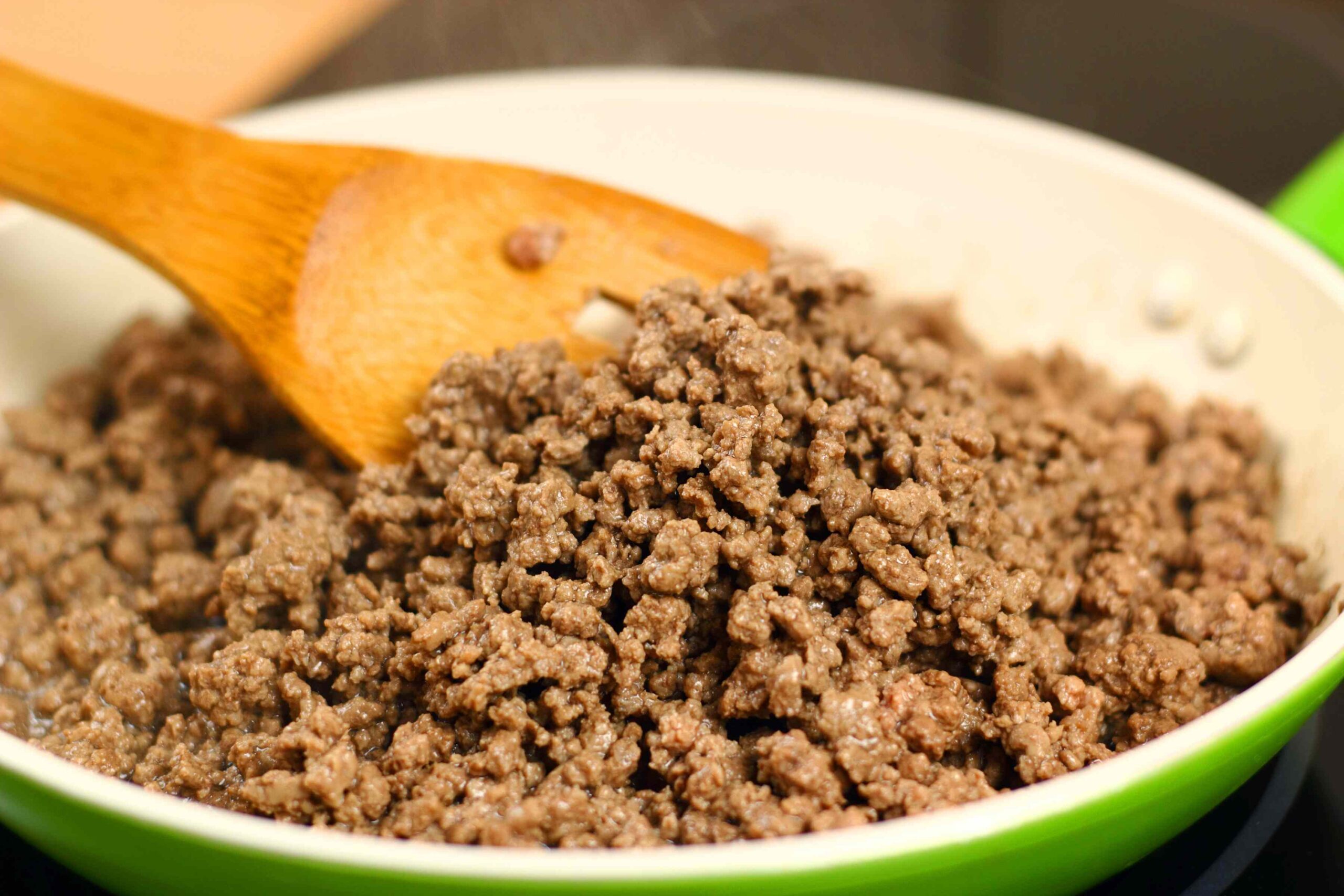
Temperature matters, according to Lynn. “Pull meat directly from the fridge and preheat a large, heavy-bottomed skillet over medium heat,” he says. Once the pan is nice and hot, add the beef, spreading it out a bit. Let it brown, then flip and break it up. “Use a wooden spoon or potato masher to break the ground beef into crumbles as you’re cooking, and stir lightly to ensure even cooking,” says Lynn. Depending on how fatty the ground beef is, I sometimes drain off some of the fat at this point. If I’m cooking lean ground beef, I skip this step.
Keep this in mind, too: When I’m making a big recipe, don’t overcrowd the pan. “If your recipe calls for more than a couple pounds of ground beef, it’s ok to cook in batches,” says Lynn. Add too much beef to the pan, and it’ll cancel out the benefits of using a large skillet.
Read the original article on Simply Recipes