

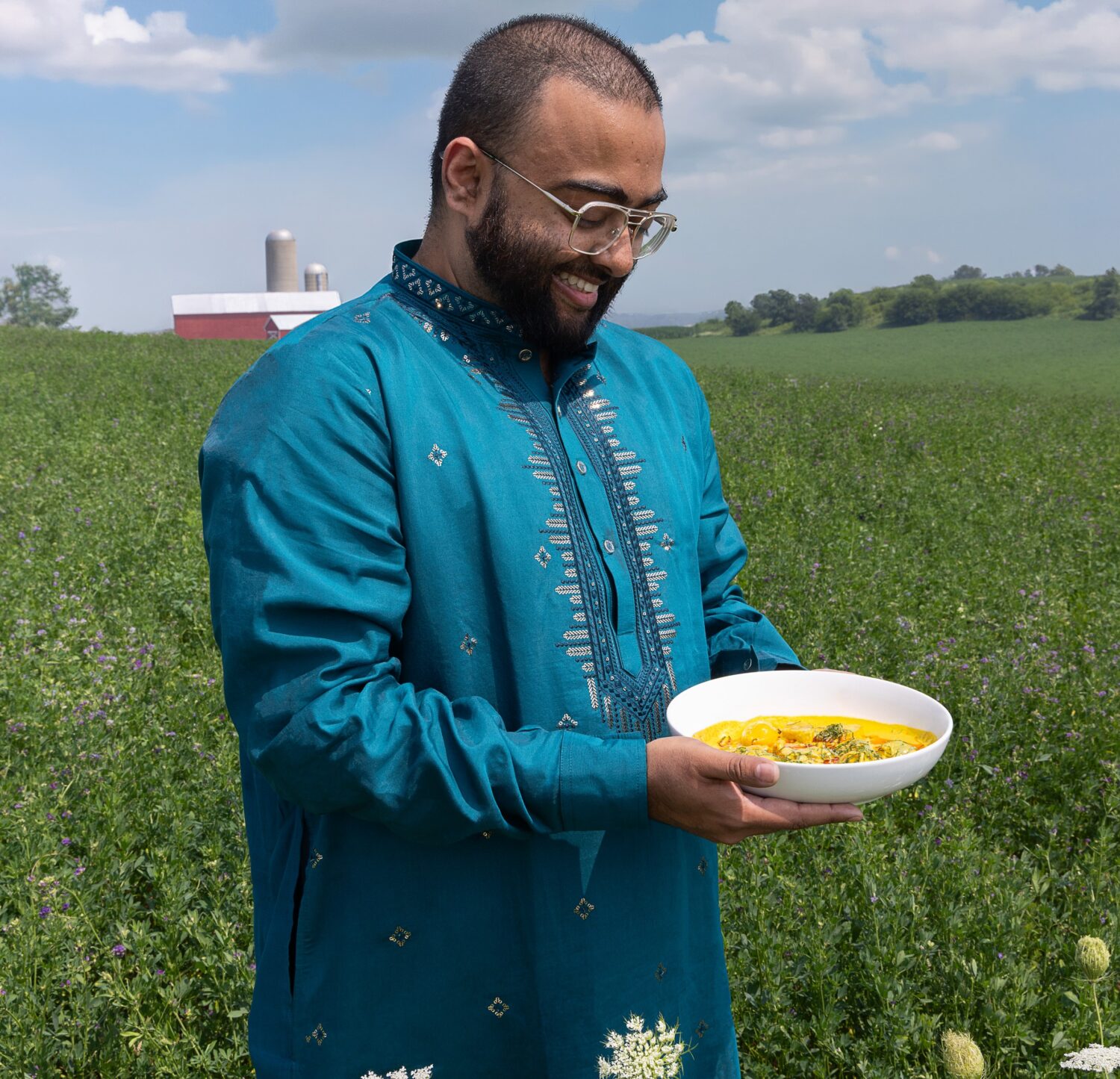
 Sultan Ahmed, owner and Sultan (Photo supplied.)
Chef and owner Sultan Ahmed of Sultan plans to release a cookbook inspired by recipes served at his Madison restaurant, as well as some of his customers’ favorites.
Sultan, a Pakistani restaurant Ahmed opened in 2023 on Madison’s East Side at 1054 Williamson St., serves modern takes on Pakistani cuisine, combining traditional flavors and techniques with cooking styles from around the world. The restaurant has been a “labor of love” for Ahmed, who took an indirect path to opening Sultan. Now, he is bringing some of the recipes and techniques that define the restaurant to his cookbook, Zameen: Pakistani Roots, Wisconsin Soil.
“We have worked with Kayla [Gendron] from Spoonful Photography for a long time, and she takes incredible photos for us,” Ahmed said. “I thought we should really showcase some full imagery of our food, and talk about our food philosophy and give customers a little bit of insight into the food and how it’s made. I think a cookbook was just a natural step.”
Beyond the visuals of the food, Ahmed wanted the book to convey a larger message. First, he wanted to highlight the depth and culinary richness of South Asian cuisine and its growing “recognition in the culinary zeitgeist,” he said. South Asian chefs have worked to showcase the cuisine’s complexity and help elevate it to the same level of recognition long afforded to French and Italian cuisine.
“I want South Asian Pakistani food to be regarded in the same way. To be regarded as something that is made with fresh ingredients with conscientious sourcing with thought to time and place and the seasons, but with high-level techniques,” Ahmed said. “Spice cookery is very difficult, and it is a culinary technique like anything else, which I think should be regarded in the same way.”
South Asian cuisine deserves to be in the same conversations around culinary prowess, Ahmed said. He mentions the dishes and the style used at Sultan. The food is deconstructed with the intent to show the brevity of flavors used in South Asia. South Asian cuisine is heavily layered with spices that make up its flavors.
An example is one of Sultan’s longest-served dishes. It’s Aloo Palak — spiced potatoes and curried spinach — that differs from the traditional style.
Traditional Aloo Palak uses the typical Pakistani salan base consisting of onions, tomatoes, fenugreek, ginger, garlic, bay leaf, coriander, chili powder, turmeric, cumin, cardamom, cloves and cinnamon cooked in oil to bloom the spices and extract the flavor. Boiled potatoes and chopped spinach are added to the mix.
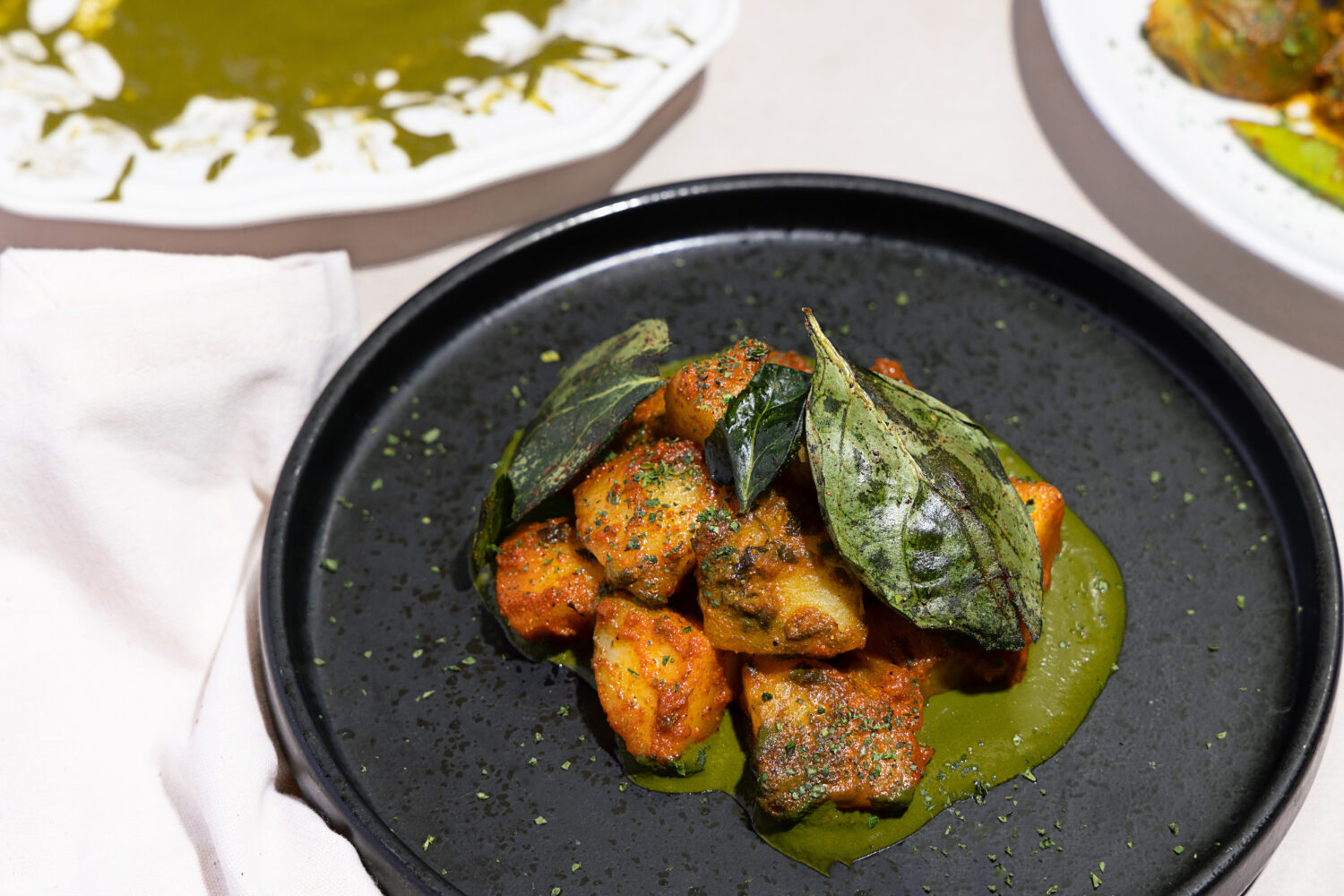 Sultan’s signature take on Aloo Palak, spiced potatoes and curried spinach
(Photo supplied.)
Sultan’s version, which will be available in the cookbook, separates out the potatoes and spinach before they are combined. The potatoes are boiled still, but are spiced and blanched separately from the spinach using its spice mix. The spinach, which uses the spice mix, is instead used as more of a sauce base for the spiced potatoes as a puree. The dish is topped with spinach chips.
Sultan’s version is intended to elevate and highlight the dish’s flavors instead of one homogeneous mixture. Other recipes of note in “Zameen” are its braised beef shank nihari and butter chicken French toast
The second point of the book is to highlight the importance of the ingredients and its sourcing. The cookbook’s title, “Zameen,” is Urdu for “land.” So, he wants to focus on the land itself. The majority of produce used at Sultan is sourced locally from Wisconsin, around 70%, Ahmed estimates.
“I think a lot of places where this type of cuisine is available doesn’t really focus on local sourcing or sourcing the highest or best quality ingredients,” Ahmed said. “I think when you become a part of the community, the recognition of the food and the culture naturally follows.”
He believes that factory farms and chemical treatments are an ecological threat that negatively impacts the quality of food. He wants people to return to local and regional agricultural supply chains of the land— the zameen — so quality and animal welfare can improve.
“All of our proteins are humane, antibiotic, hormone free, farmed in Wisconsin,” Ahemd said. “There are some things that obviously don’t grow, like lotus root that you have to import, but I think contributing to the local economy and creating smaller agricultural supply chains is really vital to food in this country.”
“Zameen” is anticipated to release on Sunday, Sept. 20. Preorders will open soon. A launch party will be held a week after the cookbook releases. Links for “Zameen” and the launch party will be posted later on Sultan’s social media pages.


